


















Home / Procedures / Upper blepharoplasty

Upper blepharoplasty (upper eyelid surgery)

Upper blepharoplasty (upper eyelid surgery, eyelid lift) removes excess skin from the upper eyelids, with or without a strip of orbicularis muscle and some fat. It is for adults with redundant upper lid skin, which can restrict the upper field of vision and cause lid heaviness, headache and tearing.

Medical illustrations

Labelled. The numbers match the key.

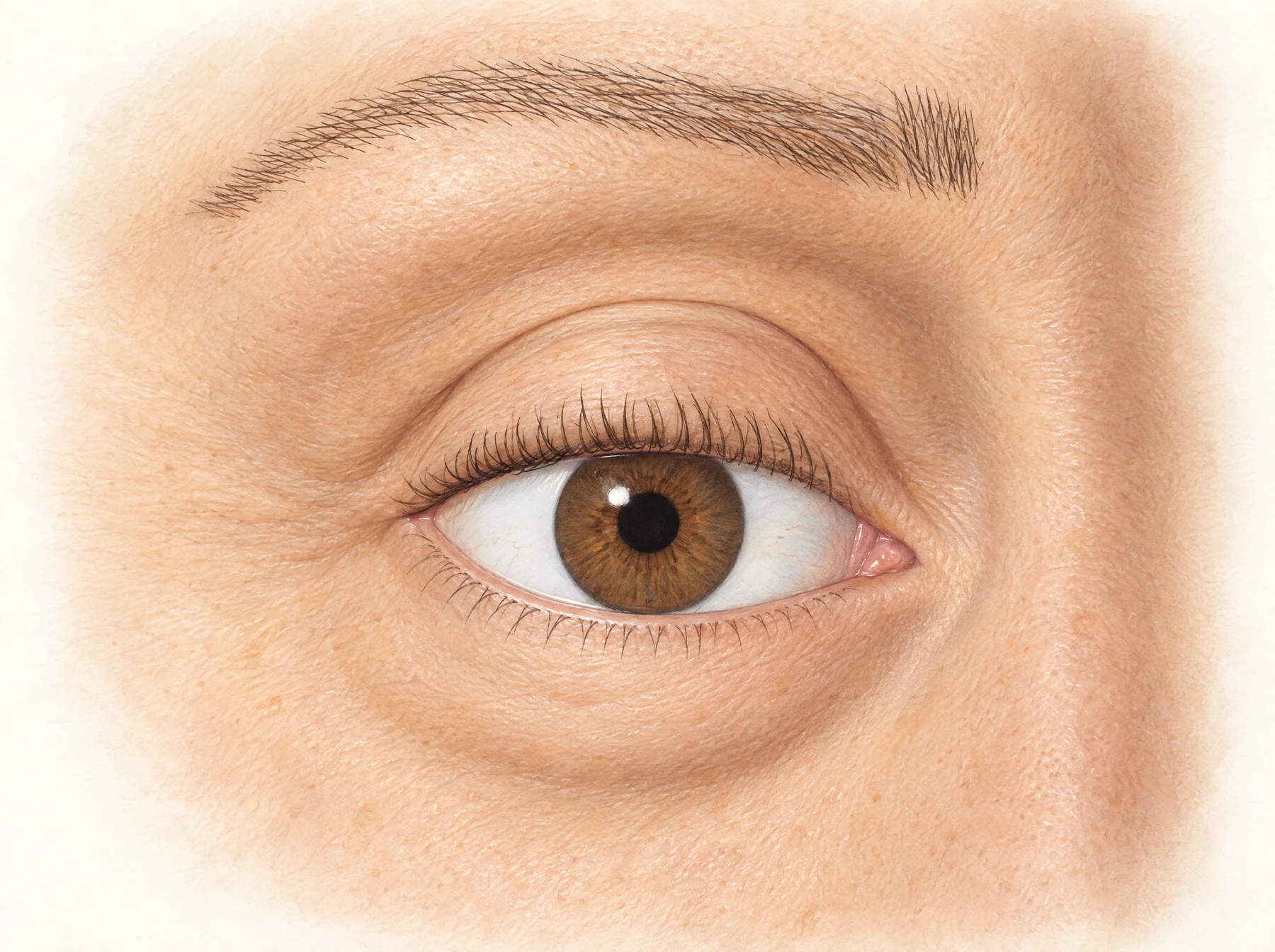
Medical illustration of the right eye region of a woman about 55 seen from the front: eyebrow, upper eyelid crease with mild hooding of the outer fold, lid margins and lashes, the inner corner with the caruncle, the slightly higher outer corner, lower lid fullness, tear trough and lid-cheek junction.

Eyelid surface landmarks

The right eye of a woman in her mid-fifties, showing the brow, the upper lid crease and fold, the corners of the eye, the tear trough and the lid-cheek junction.

  1. Eyebrow
  2. Upper eyelid crease
  3. Upper eyelid skin fold
  4. Upper eyelid margin and lashes
  5. Lateral canthus
  6. Medial canthus
  7. Caruncle
  8. Lower eyelid margin
  9. Lower eyelid
  10. Tear trough
  11. Lid-cheek junction
  12. Cheek
  13. Iris
  14. Pupil
  15. Sclera

Anatomy checked against StatPearls. Anatomy, Head and Neck: Eyelid, StatPearls. Blepharoplasty, StatPearls. Blepharoplasty, Lower Lid, Canthal Support, Wong CH et al. The tear trough ligament: anatomical basis for the tear trough deformity. Plast Reconstr Surg 2012, Muzaffar AR et al. Surgical anatomy of the ligamentous attachments of the lower lid and lateral canthus. Plast Reconstr Surg 2002.

Every eyelid illustration

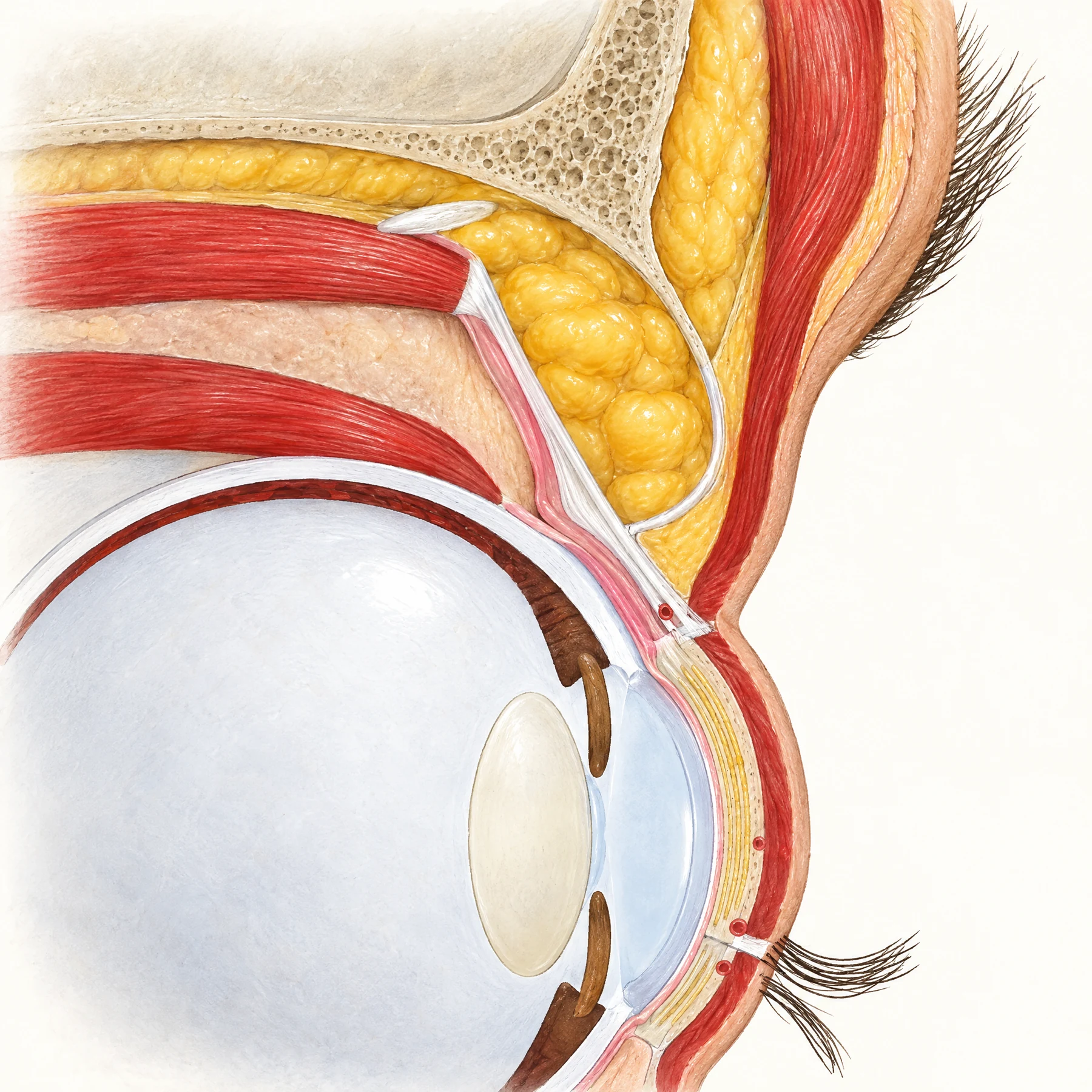
Medical illustration of the upper eyelid cut from top to bottom through the pupil, face to the right: skin, orbicularis muscle, orbital septum, preaponeurotic fat, levator muscle and aponeurosis, Müller muscle, tarsus and conjunctiva lying over the eyeball.

Upper eyelid cross-section

Cross-section of the closed upper eyelid through the middle of the pupil, from the brow down to the lashes.

  1. Eyebrow
  2. Orbicularis oculi, orbital part
  3. Brow fat (ROOF)
  4. Frontal bone, superior orbital rim
  5. Orbital septum
  6. Preaponeurotic fat pad
  7. Whitnall ligament
  8. Levator palpebrae superioris muscle
  9. Levator aponeurosis
  10. Müller muscle
  11. Superior rectus muscle
  12. Superior conjunctival fornix
  13. Orbicularis oculi, preseptal part
  14. Peripheral arterial arcade
  15. Eyelid crease
  16. Tarsus with meibomian glands
  17. Orbicularis oculi, pretarsal part
  18. Skin
  19. Eyelashes
  20. Cornea
  21. Iris
  22. Lens

Anatomy checked against StatPearls. Anatomy, Head and Neck: Eyelid, StatPearls. Anatomy, Head and Neck: Eye, Superior Tarsal Muscle (Müller Muscle), Hwang K. Surgical anatomy of the upper eyelid relating to upper blepharoplasty or blepharoptosis surgery. Anat Cell Biol 2013, Meyer DR et al. Anatomy of the orbital septum and associated eyelid connective tissues. Ophthalmic Plast Reconstr Surg 1991, Anderson RL, Beard C. The levator aponeurosis. Attachments and their clinical significance. Arch Ophthalmol 1977, Kakizaki H et al. Whitnall ligament anatomy revisited. Clin Exp Ophthalmol 2011, May JW Jr et al. Retro-orbicularis oculus fat (ROOF) resection in aesthetic blepharoplasty. Plast Reconstr Surg 1990, EyeWiki. Aponeurotic Blepharoptosis, Gray's Anatomy (1918), fig. 893: sagittal section of the upper eyelid.

Every eyelid illustration

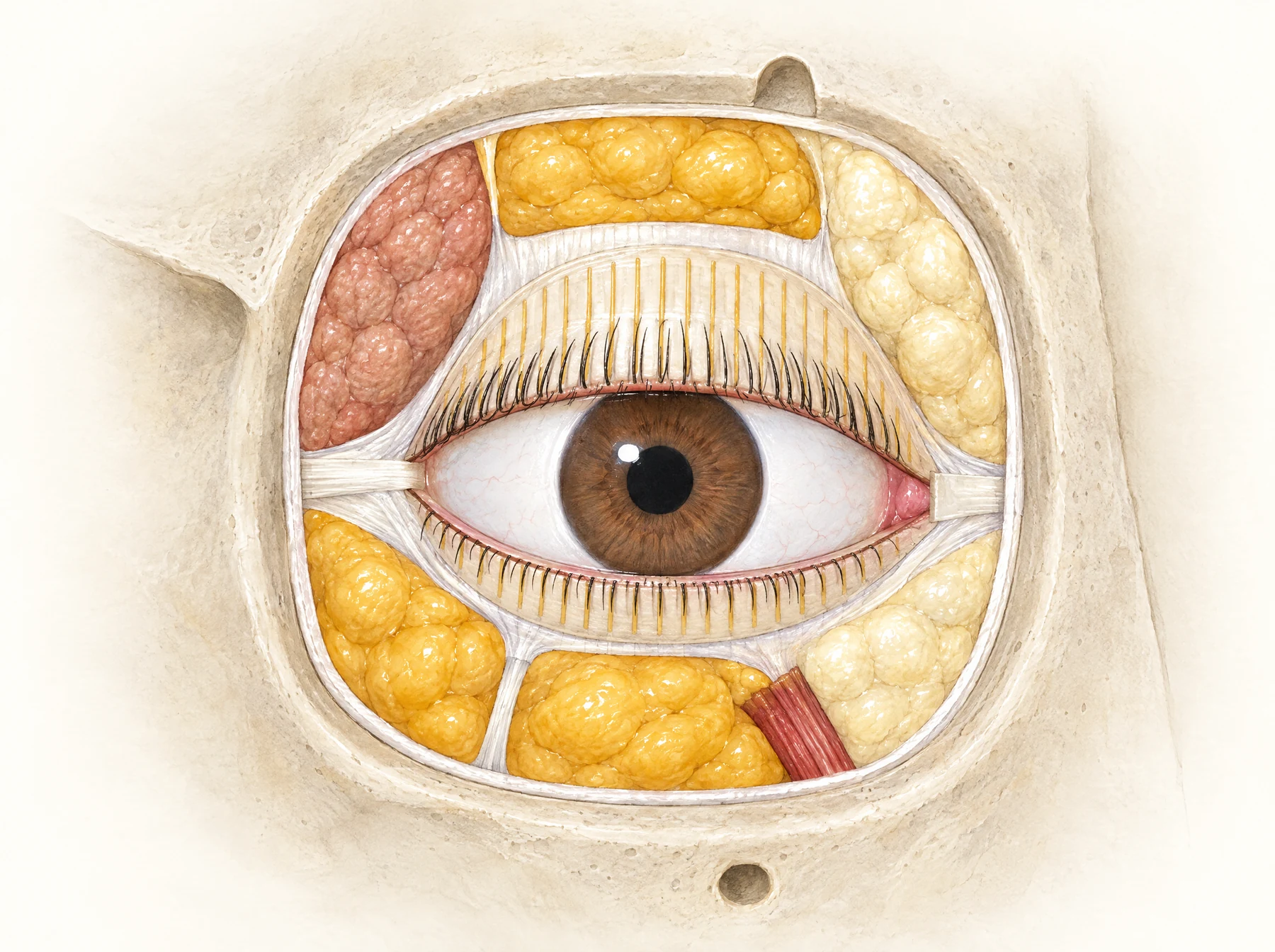
Medical illustration of the right eye region from the front with skin and muscle removed: the lacrimal gland, the central and nasal fat pads of the upper eyelid, the lateral, central and medial fat pads of the lower eyelid with the inferior oblique muscle between the medial and central pads, the tarsal plates and canthal tendons, framed by the bony orbital rim.

Orbital fat pads, front view

The right eye from the front with the skin and orbicularis removed and the orbital septum opened, showing the fat pads of the upper and lower eyelids.

  1. Lacrimal gland
  2. Central fat pad, upper eyelid
  3. Nasal fat pad, upper eyelid
  4. Levator aponeurosis
  5. Upper tarsus with meibomian glands
  6. Lateral canthal tendon
  7. Medial canthal tendon
  8. Caruncle
  9. Lower tarsus
  10. Lateral fat pad, lower eyelid
  11. Central fat pad, lower eyelid
  12. Medial fat pad, lower eyelid
  13. Inferior oblique muscle
  14. Arcuate expansion
  15. Cut edge of the orbital septum
  16. Supraorbital notch
  17. Infraorbital foramen
  18. Lateral orbital rim
  19. Iris
  20. Sclera

Anatomy checked against StatPearls. Anatomy, Head and Neck: Eyelid, StatPearls. Blepharoplasty, StatPearls. Transconjunctival Blepharoplasty, Hwang K. Surgical anatomy of the lower eyelid relating to lower blepharoplasty. Anat Cell Biol 2010, Massry GG. Prevalence of lacrimal gland prolapse in the functional blepharoplasty population. Ophthalmic Plast Reconstr Surg 2011, Gray's Anatomy (1918), fig. 894: tarsi and their ligaments.

Every eyelid illustration

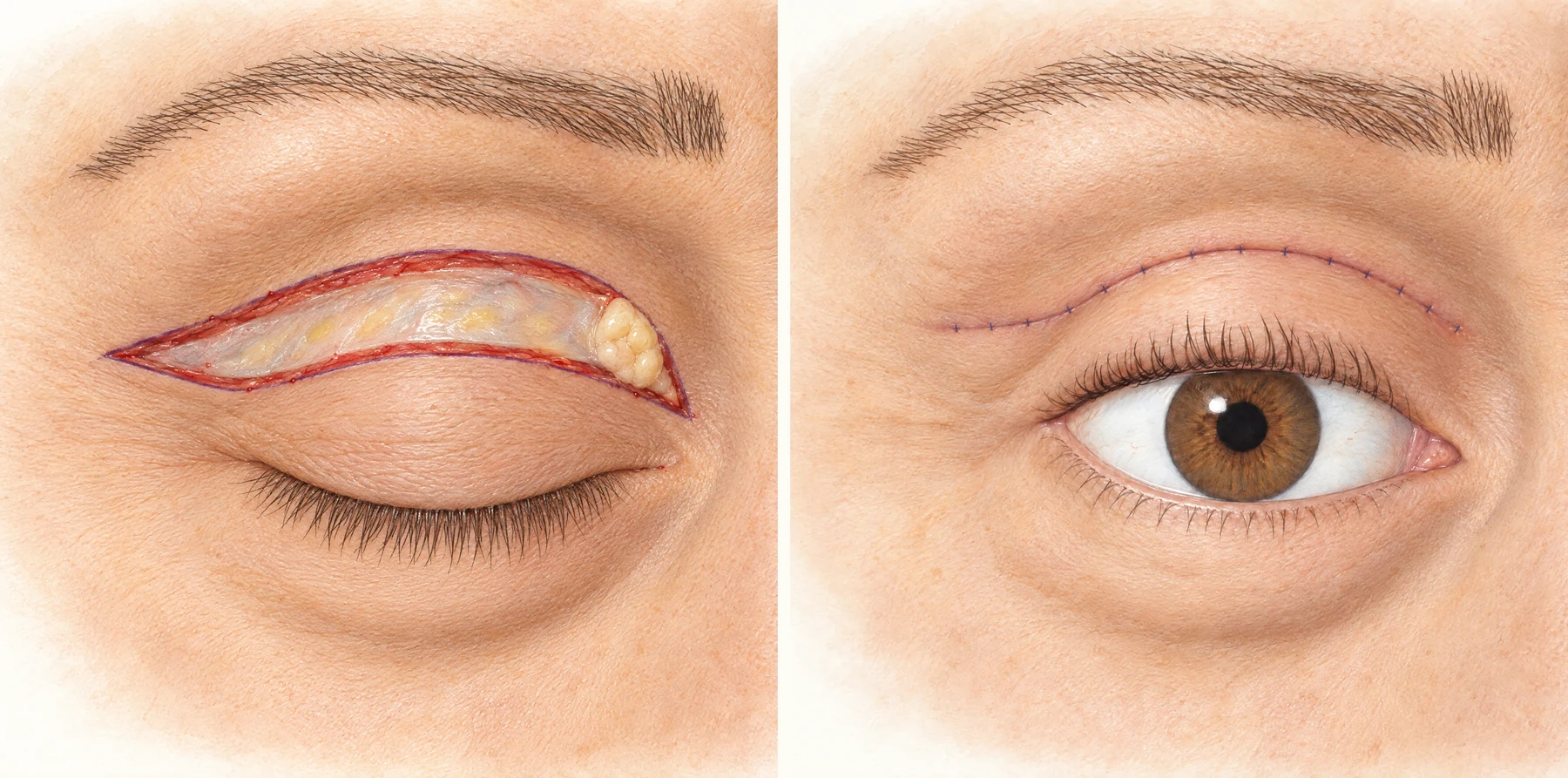
Two-panel medical illustration of the right eye from the front. Left: eye closed, a crescent of skin and a strip of orbicularis muscle removed between violet marking lines in the upper lid crease, exposing the orbital septum and the pale nasal fat pad. Right: eye open after surgery, with a fine sutured incision in the crease that ends a little beyond the outer corner of the eye.

Upper blepharoplasty

Upper eyelid skin is removed through an incision in the natural crease (left), and the wound is closed so the scar lies in the crease (right).

  1. Lower incision line in the eyelid crease
  2. Upper incision line
  3. Orbital septum
  4. Central fat pad behind the septum
  5. Nasal fat pad
  6. Orbicularis oculi, cut edge
  7. Lateral end of the incision
  8. Closed incision in the eyelid crease
  9. Lateral end of the closed incision

Anatomy checked against StatPearls. Blepharoplasty, StatPearls. Anatomy, Head and Neck: Eyelid, Hwang K. Surgical anatomy of the upper eyelid relating to upper blepharoplasty or blepharoptosis surgery. Anat Cell Biol 2013.

Every eyelid illustration

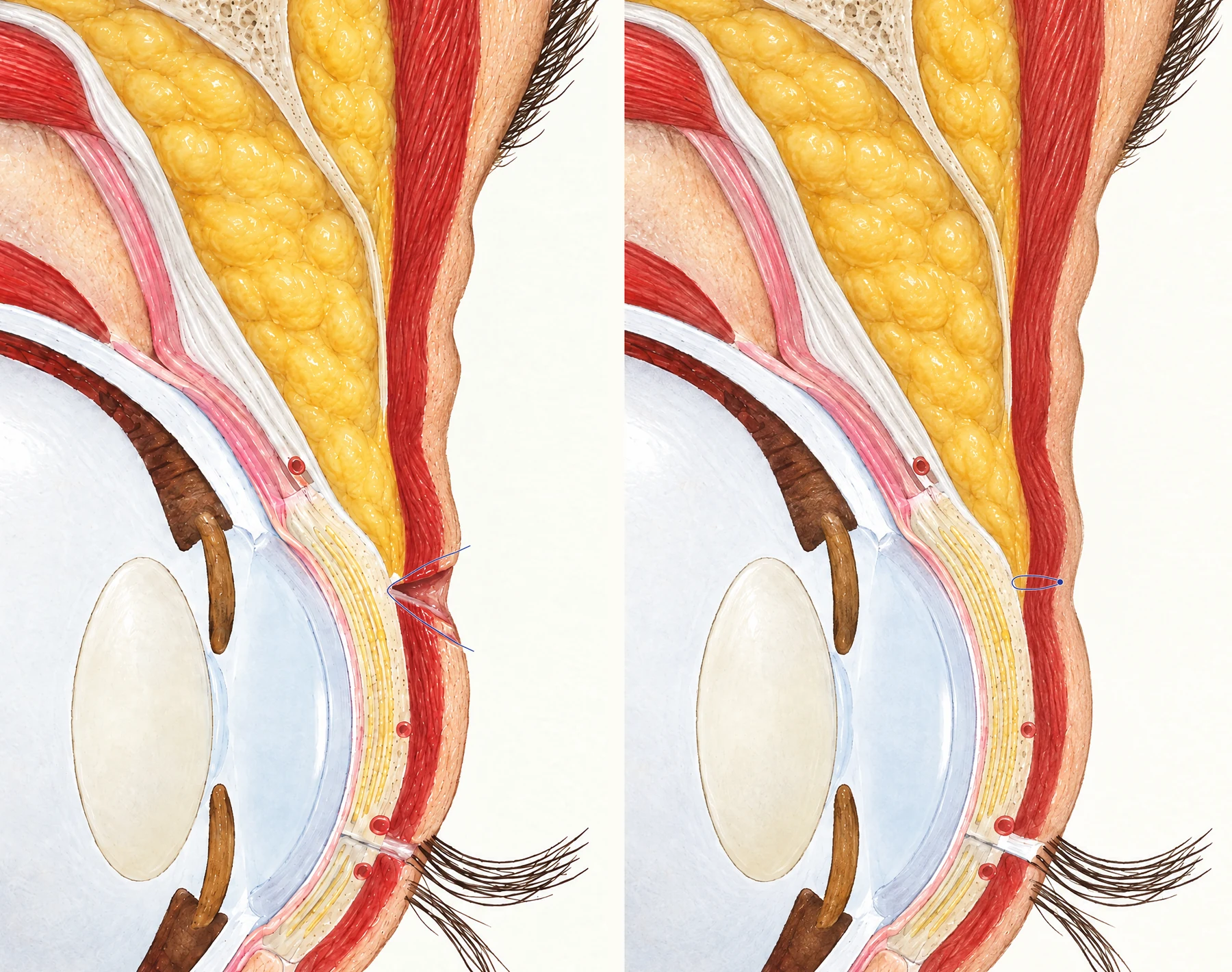
Two side cross-sections of an East Asian upper eyelid, face to the right. In both, the preaponeurotic fat comes down in front of the upper part of the tarsus and the orbital septum joins the levator aponeurosis on the tarsus. Left: a wedge-shaped incision at the planned crease about 7 mm above the lashes reaches the aponeurosis on the tarsus, and a blue stitch passes from the lower skin edge through the aponeurosis to the upper skin edge. Right: a blue stitch loops from a knot buried under the skin at the crease line to the front of the tarsus.

Double eyelid surgery

Cross-sections of an East Asian upper eyelid, where the septum and fat reach down in front of the tarsus. Left: incisional method, with a strip of tissue removed at the planned crease and a stitch joining the skin edges to the levator aponeurosis. Right: buried-suture method, with a stitch from under the skin to the tarsus and no incision.

  1. Levator aponeurosis
  2. Müller muscle
  3. Preaponeurotic fat
  4. Orbital septum
  5. Orbicularis oculi muscle
  6. Tarsus
  7. Incision at the planned crease
  8. Suture from the skin edges to the levator aponeurosis
  9. Buried suture, knot under the skin
  10. Fat in front of the upper tarsus
  11. Septum joining the aponeurosis on the tarsus

Anatomy checked against EyeWiki. Asian Blepharoplasty (Double Eyelid Procedure), Jeong S et al. The Asian upper eyelid: an anatomical study with comparison to the Caucasian eyelid. Arch Ophthalmol 1999, StatPearls. Anatomy, Head and Neck: Eyelid, Hwang K. Surgical anatomy of the upper eyelid relating to upper blepharoplasty or blepharoptosis surgery. Anat Cell Biol 2013.

Every eyelid illustration

See the work

Surgeons whose own sites show upper blepharoplasty: before-and-after photographs first. Choose your state for the surgeons near you.

Surgeons by stateAlabamaAlaskaArizonaArkansasCaliforniaColoradoConnecticutDelawareDistrict of ColumbiaFloridaGeorgiaHawaiiIdahoIllinoisIndianaIowaKansasKentuckyLouisianaMaineMarylandMassachusettsMichiganMinnesotaMississippiMissouriMontanaNebraskaNevadaNew HampshireNew JerseyNew MexicoNew YorkNorth CarolinaNorth DakotaOhioOklahomaOregonPennsylvaniaRhode IslandSouth CarolinaSouth DakotaTennesseeTexasUtahVermontVirginiaWashingtonWest VirginiaWisconsinWyoming

Oculoplastic surgeon
Austin, Texas
See the before and after
Oculoplastic surgeon
Tampa, Florida
See the before and after
Oculoplastic surgeon
Providence, Rhode Island
See the before and after
Plastic surgeon
Houston, Texas
See the before and after
Facial plastic surgeon
Aliso Viejo, California
See the before and after
Plastic surgeon
Tysons Corner, Virginia
See the before and after
Plastic surgeon
Los Angeles, California
See the before and after
Oculoplastic surgeon
Bellaire, Texas
See the before and after
Plastic surgeon
Meridian, Idaho
See the before and after
Plastic surgeon
New York, New York
See the before and after
Plastic surgeon
Beverly Hills, California
See the before and after
Oculoplastic surgeon
Scottsdale, Arizona
See the before and after

What upper blepharoplasty costs

Self-pay prices, and what insurance pays when the operation is covered.

Published prices
$5,000

Most practices that publish a price for it charge between $3,850 and $6,000.

Average surgeon fee
$3,359

From the American Society of Plastic Surgeons, before anesthesia and the operating room.

When insurance covers it
$778

Medicare's average payment to the surgeon (Upper blepharoplasty, skin weighting down the lid, CPT 15823). The surgery center is paid separately; you pay your deductible and coinsurance.

What eyelid surgery costs, in full · Prices in your state are on your state's page.

Dermatochalasis: what it treats

  • Dermatochalasis is excess eyelid skin; it can occur with orbital fat prolapse, lacrimal gland prolapse and involutional ptosis; upper blepharoplasty is among the most common cosmetic operations in the United States (PMID 42236867).
  • Blepharoplasty for herniated orbital fat was described on an anatomical basis in 1951 (PMID 14864073).
  • Older technique removed skin, muscle and a large amount of fat and left some patients with a hollow orbit; current methods remove less tissue (PMID 15536308).
  • Pretarsal show: most eyes have complete pretarsal show before surgery; this group improved less after conventional excision (PMID 33234951).
  • Superior visual field: skin excision enlarged the upper visual field several-fold at 3 months, and the preoperative field predicted the gain better than lid height (PMID 35086303).
  • Visual quality: contrast sensitivity rose and astigmatism fell after surgery; visual acuity did not change (PMID 36788649).
  • Visual field testing alone does not capture the whole burden of dermatochalasis; no validated dermatochalasis-specific symptom questionnaire exists (PMID 42693598).
  • Hidden ptosis: a survey of Aesthetic Society surgeons concluded that mild to moderate ptosis and different upper lid aging patterns are underrecognized (PMID 33346340).

How it is done

Skin, muscle and fat

  • Skin-only excision leaves the orbicularis oculi muscle in place; skin-muscle excision removes a strip of preseptal orbicularis with the skin (PMID 33538853).
  • Fat can be removed from the central (preaponeurotic) and nasal pads (PMID 39856176), preserved, or moved: one technique anchors the nasal fat pad centrally to fill the upper lid (PMID 39421583).
  • Volumetric upper blepharoplasty: fat grafting to the hollow upper lid, usually combined with orbicularis imbrication (PMID 28753160).
  • Surgeons with long experience or high case volume preserved volume more often and more often added fat grafting, brow lift and ptosis repair (PMID 33346340).

Skin excision shape and closure

  • A laterally extended excision gave slightly more and more even pretarsal show than a traditional ellipse; the ellipse group had more lateral brow descent (PMID 36205656).
  • Intradermal and continuous nylon sutures gave equal scar quality at 6 months, and most patients rated the result much or very much improved (PMID 42118953).
  • Scalpel, radiofrequency and CO2 laser incisions gave no difference in final scar; absorbable and nonabsorbable sutures healed alike (PMID 41193896).

Anesthesia

  • Adding tranexamic acid to lidocaine with epinephrine increased intraoperative blood loss, with no difference in swelling or bruising at day 7 (PMID 38789809).

Results and evidence

Muscle excision or skin only

  • Across randomized trials, dry eye symptoms fell after surgery; dry eye did not differ between skin-muscle and skin-only excision; incomplete eye closure (lagophthalmos) was more frequent with muscle excision; satisfaction did not differ (PMID 40152471).
  • A systematic review found no long-term aesthetic difference; muscle excision gave more early swelling, bruising, pain, dry eye and lagophthalmos, which resolved within weeks (PMID 33538853).
  • In a left-right randomized trial, the muscle-excised side had more symptoms and a worse appearance at day 7, with no difference at days 30 and 90 (PMID 21224748).
  • In a randomized trial at 12 months, skin-only and skin-muscle scored the same for upper lids, brows, face and satisfaction; the "eyes in general" score was higher after skin-only (PMID 35219565).
  • A retrospective series found slightly more complications and higher satisfaction when skin, muscle and fat were all excised than with skin only (PMID 39856176).

Dry eye and function

  • Subjective dry eye complaints fell by 12 months with either technique; objective tear measures did not change (PMID 34612583).
  • Dry eye symptom scores fell at 1 month and 1 year with orbicularis-sparing and orbicularis-excising technique alike (PMID 37354267).
  • The American Academy of Ophthalmology review found most studies showed no subjective dry eye worsening, and reported benefits in visual function, headache and daily life (PMID 40913605).
  • Headache scores fell and brow height decreased after blepharoplasty, with no difference between techniques (PMID 36674313).

Satisfaction

  • Photographs scored by independent reviewers showed a clear rise in cosmetic score after surgery (PMID 33234951).
  • Upper eyelid appraisal and satisfaction with eyes improved on FACE-Q; preoperative severity did not predict satisfaction (PMID 39037480).
  • Nasal fat preservation raised the FACE-Q upper eyelid score, with no fat necrosis and volume held at about 1 year (PMID 39421583).

Brow position

  • Brow height fell about 1.5 mm after upper eyelid surgery overall and about 0.7 mm after simple blepharoplasty; skin excision itself did not affect brow height (PMID 36890345).

Risks and complications

  • Orbital hemorrhage after cosmetic eyelid surgery occurs in about 1 in 2,000 cases; permanent visual loss from it occurs in about 1 in 22,000; most hemorrhages began within 3 hours of surgery (PMID 15599241).
  • A review of blindness after blepharoplasty found retrobulbar hemorrhage in most cases, and the final event was usually retinal or optic nerve ischemia (PMID 3516289).
  • Major complications occurred in about 4 in 1,000 aesthetic eye surgery patients; hematoma, the most common, in about 2 in 1,000 (PMID 29369102).
  • Wound dehiscence occurred in about 1 in 70 eyelids at a mean 9 days; male sex and fast-absorbing gut suture were independent risk factors (PMID 32852369).
  • Patients on aspirin, warfarin or apixaban had no significantly higher complication rate than patients not on them, and no major bleeding (PMID 42236867).
  • Revision was needed in about 1 in 26 patients after blepharoplasty alone against about 1 in 11 when ptosis correction was added (PMID 38315110).
  • New dry eye lasting 3 months or longer occurred in under 1% of upper blepharoplasties and all resolved (PMID 38315110).
  • Post-upper blepharoplasty syndrome (ptosis, hollow sulcus, high crease): the levator aponeurosis was disinserted and bound into septal scar left by fat removal (PMID 31802837).
  • Complication timeline: corneal abrasion and retrobulbar hemorrhage in week 1; lid malposition, exposure and tearing in weeks 1-6; contour change, asymmetry and scarring later (PMID 20195127).

Recovery

  • Bleeding risk is highest in the first 3 hours and falls after 24 hours, though hemorrhage can occur several days later (PMID 15599241).
  • Ice packs had no effect on swelling, redness or hematoma, and gave slightly less pain on day 1 (PMID 25626811).
  • Arnica ointment 10% made no difference from placebo in swelling, bruising, pain or satisfaction (PMID 27348641).
  • Oral bromelain for 2 weeks lowered swelling scores on days 3, 7 and 11 and bruising on day 3 only (PMID 42728656).
  • Return to work was shorter after skin-only surgery than after skin, muscle and fat excision (PMID 39856176).
  • Silicone products reduced hypertrophic scarring; cold compresses, compressive dressings and over-the-counter scar products showed minimal benefit (PMID 41193896).

Combined procedures

  • Blepharoplasty was the most common procedure added to facelift; combined procedures raised the odds of adverse events (PMID 32459769).
  • Blepharoplasty combined with brow lift had the same major complication rate as blepharoplasty alone (PMID 29369102).
  • Brow lift was added in about 3 in 10 and ptosis correction in 1 in 5 upper blepharoplasties in one series (PMID 38315110).
  • Brow lift and blepharoplasty overview, including upper lid blepharoplasty with supratarsal fixation (PMID 20595828).

Upper and lower together

  • One review of aesthetic surgery of the forehead and eye area presents upper lid blepharoplasty with supratarsal fixation and lower lid blepharoplasty with tear trough correction (PMID 20595828).
  • Complications after upper or lower lid surgery follow one timeline, from orbital hemorrhage in the first week to lid malposition and scarring later (PMID 20195127); lower lid technique is in Lower blepharoplasty.

Current questions

  • Muscle excision: pooled randomized data show more lagophthalmos and no aesthetic gain (PMID 40152471); a 2025 retrospective series reported higher satisfaction when muscle and fat were removed (PMID 39856176).
  • Volume preservation against fat excision: experienced surgeons preserve more volume (PMID 33346340); the nasal fat preservation series is small with about 1 year of follow-up (PMID 39421583).
  • Complete pretarsal show: the authors advise considering fat grafting or ptosis repair instead of skin excision alone (PMID 33234951).
  • Continuing blood thinners through surgery: one 2026 cohort found no major bleeding (PMID 42236867).
  • Functional criteria: a 2026 review proposes adding a symptom score to visual field testing for funding decisions (PMID 42693598).
  • Recovery adjuncts: bromelain reduced swelling in a 2026 trial (PMID 42728656); tranexamic acid in the local anesthetic increased bleeding in a 2024 trial (PMID 38789809).

Terms

  • Dermatochalasis: excess, lax eyelid skin (PMID 42236867).
  • Orbicularis oculi: the muscle that closes the eyelids; a strip is sometimes removed with the skin (PMID 33538853).
  • Preaponeurotic and nasal fat pads: the two fat compartments of the upper lid (PMID 39856176).
  • Pretarsal show: the visible lid skin between lashes and crease (PMID 33234951).
  • MRD1: distance from the corneal light reflex to the upper lid margin, a measure of lid height (PMID 35086303).
  • Lagophthalmos: incomplete eyelid closure (PMID 40152471).
  • Orbital (retrobulbar) hemorrhage: bleeding behind the eye that can compress the optic nerve (PMID 15599241).
  • Levator aponeurosis: the tendon that lifts the upper lid (PMID 31802837).
  • FACE-Q: a validated patient questionnaire for facial aesthetic outcomes (PMID 35219565).
  • Volumetric blepharoplasty: eyelid surgery that adds or keeps volume, for example with fat grafting (PMID 28753160).

Upper blepharoplasty questions

When can I wear makeup after blepharoplasty?

Practice aftercare pages allow eye makeup again 7 days (finnplasticsurgery.com) to 14 days (drchapin.com) after surgery. One practice states "Most patients can wear makeup about 10 to 14 days after surgery" (drchapin.com). Another states "You may apply cosmetics one week after surgery" (a-new-face.com). Several practices wait until the sutures are out and the incisions have healed (maloneycenter.com).

How long after blepharoplasty can I wear contacts?

Most practice aftercare pages say to keep contact lenses out for about 2 weeks (doctorgoldberg.com, mainlineips.com). One practice states "Contact lens wear may resume after approximately 1 week" (murrietafacialplasticsurgery.com). Another states "Wear glasses instead of contacts for the first 2 to 3 weeks after surgery" (youthfulreflections.com). Some practices allow lenses once the swelling lets the lids be handled (swansoncenter.com).

Do ice packs help after blepharoplasty?

In a randomized trial, one upper lid of each patient was cooled with an ice pack and the other was left uncooled (PMID 25626811). Swelling, redness and bruising did not differ between the two sides at any time point (PMID 25626811). Pain was slightly lower on the cooled side 1 day after surgery (PMID 25626811). Most patients had no preference for cooling, and the authors concluded routine cooling can be dropped (PMID 25626811).

Is upper blepharoplasty covered by insurance?

Medicare covers upper blepharoplasty when overhanging skin is low enough to impair the visual field or cause brow fatigue (CMS LCD L34411). Surgery done only to change appearance is not covered (CMS LCD L34411). Aetna requires a photograph of skin overhanging the lashes and a visual field test that improves when the lid is taped (Aetna CPB 0084). Medicare lists the operation as CPT code 15823 (CMS LCD L34411).

When can I sleep on my side after blepharoplasty?

Practice aftercare pages tell patients to sleep on their back with the head raised (portcityplasticsurgery.com). One practice states "Sleep on your back for 1-2 weeks and use a cool pack to reduce swelling" (drjamesanthony.com). Another states "You will need to sleep on your back for one to two weeks" (doctoralizadeh.com). A third states "Sleep on your back with your head elevated above your heart during the first week following surgery" (cohnface.com).

Papers cited on this page

Newest first.

2026
Upper Blepharoplasty Suturing Techniques: A Paired-Eye Comparative Study of Intradermal vs Continuous Sutures
Soares R, Limongi RM, Allen RC, Bernardini F, Isaac DLC, de Ávila MP · Aesthet Surg J · Randomized Controlled Trial · PMID 42118953
2026
From Incision to Healing: An Evidence-Based Review of Scar Optimization in Upper Blepharoplasty
Aghajani A, Babaei L, Eshraghi B · Aesthetic Plast Surg · PMID 41193896
2026
Oral Bromelain Reduces Postoperative Edema Following Upper Blepharoplasty: A Randomized Triple-Blind Placebo-Controlled Trial
Shamloo M, Rafiei M, Esmaeili A, Zamani Barsari F, Golparvaran S, Aalizade A, et al. · Aesthet Surg J · PMID 42728656
2025
Functional and Aesthetic Outcomes After Upper Blepharoplasty: A Systematic Review and Meta-analysis of Randomized Control Trials
Todorov D, Mitchell S, Al-Hashimi M, Dajani Z, Sunn Hoah Yap K, Imtiaz H, et al. · Aesthet Surg J · Systematic Review · PMID 40152471
2024
Tranexamic Acid Subcutaneously Administered with Epinephrine and Lidocaine in Upper Blepharoplasty: A Randomized Double-Blind Control Trial
Chaichumporn T, Kanokkangsadal P, Sarovath A · Aesthetic Plast Surg · Randomized Controlled Trial · PMID 38789809
2024
Eyelid and Brow Rejuvenation: Technical Pearls and Outcomes of Upper Blepharoplasty with or without Ptosis Correction and Brow Lift
Falcon Rodriguez L, Kuruoglu D, Salinas CA, Liu A, Wagner LH, Bradley EA, et al. · Plast Reconstr Surg · PMID 38315110
2023
Traditional versus Laterally Extended Upper Blepharoplasty Skin Excisions: Objective and Patient-Reported Outcomes
Hollander MHJ, Contini M, Delli K, Vissink A, Schepers RH, Jansma J, et al. · Plast Reconstr Surg · PMID 36205656
2023
Dry eye in the upper blepharoplasty patient: a study comparing orbicularis-sparing versus orbicularis-excising techniques
Mian OT, Lippe CM, Khan A, Bugg VA, Bryant JC, Riaz KM, et al. · Graefes Arch Clin Exp Ophthalmol · Randomized Controlled Trial · PMID 37354267
2023
Effects of Upper Blepharoplasty Techniques on Headaches, Eyebrow Position, and Electromyographic Outcomes: A Randomized Controlled Trial
Hollander MHJ, van der Hoeven JH, Verdonschot KHM, Delli K, Vissink A, Jansma J, et al. · Int J Environ Res Public Health · Randomized Controlled Trial · PMID 36674313
2023
Does Brow Lift Add Risk to Blepharoplasty? Answers From a Multicenter Analysis of 6126 Patients Undergoing Aesthetic Eye Surgery
Wormer BA, Rankin TM, Kaoutzanis C, Al Kassis S, Gupta V, Grotting JC, et al. · Ann Plast Surg · PMID 29369102
2022
Patient-reported aesthetic outcomes of upper blepharoplasty: a randomized controlled trial comparing two surgical techniques
Hollander MHJ, Delli K, Vissink A, Schepers RH, Jansma J · Int J Oral Maxillofac Surg · Randomized Controlled Trial · PMID 35219565
2022
Impact of upper blepharoplasty, with or without orbicularis oculi muscle removal, on tear film dynamics and dry eye symptoms: A randomized controlled trial
Hollander MHJ, Pott JWR, Delli K, Vissink A, Schepers RH, Jansma J · Acta Ophthalmol · Randomized Controlled Trial · PMID 34612583
2021
Is Orbicularis Oculi Muscle Resection Necessary in Upper Blepharoplasty? A Systematic Review
Samargandi OA, Prabhu N, Boudreau C, Williams J · Aesthetic Plast Surg · Systematic Review · PMID 33538853
2021
Wound Dehiscence Following Upper Blepharoplasty: A Review of 2,376 Cases
Homer NA, Zhou S, Watson AH, Durairaj VD, Nakra T · Ophthalmic Plast Reconstr Surg · PMID 32852369
2020
Rethinking Upper Blepharoplasty: The Impact of Pretarsal Show
Alghoul MS, Bricker JT, Venkatesh V, Gupta AR, Vaca EE, Sinno S, et al. · Plast Reconstr Surg · PMID 33234951
2016
Arnica Ointment 10% Does Not Improve Upper Blepharoplasty Outcome: A Randomized, Placebo-Controlled Trial
van Exsel DCE, Pool SMW, van Uchelen JH, Edens MA, van der Lei B, Melenhorst WBWH · Plast Reconstr Surg · Randomized Controlled Trial · PMID 27348641
2015
The effect of eyelid cooling on pain, edema, erythema, and hematoma after upper blepharoplasty: a randomized, controlled, observer-blinded evaluation study
Pool SMW, van Exsel DCE, Melenhorst WBWH, Cromheecke M, van der Lei B · Plast Reconstr Surg · Randomized Controlled Trial · PMID 25626811
2011
Upper blepharoplasty with or without resection of the orbicularis oculi muscle: a randomized double-blind left-right study
Damasceno RW, Cariello AJ, Cardoso EB, Viana GA, Osaki MH · Ophthalmic Plast Reconstr Surg · Randomized Controlled Trial · PMID 21224748
2010
Blepharoplasty complications
Lelli GJ, Lisman RD · Plast Reconstr Surg · PMID 20195127
2010
Blepharoplasty and brow lift
Codner MA, Kikkawa DO, Korn BS, Pacella SJ · Plast Reconstr Surg · PMID 20595828
2004
Current concepts in aesthetic upper blepharoplasty
Rohrich RJ, Coberly DM, Fagien S, Stuzin JM · Plast Reconstr Surg · PMID 15536308
2004
Incidence of postblepharoplasty orbital hemorrhage and associated visual loss
Hass AN, Penne RB, Stefanyszyn MA, Flanagan JC · Ophthalmic Plast Reconstr Surg · PMID 15599241
1986
Blindness following cosmetic blepharoplasty--a review
Mahaffey PJ, Wallace AF · Br J Plast Surg · PMID 3516289
1951
Blepharoplasty for herniated intraorbital fat; anatomical basis for a new approach
CASTANARES S · Plast Reconstr Surg (1946) · PMID 14864073